Disclaimer The following story is loosely based on true events.
When I say loosely, I mean like a sew-in two months past due—hanging on by a few baby hairs and a prayer.
Or like a group chat after the drama: still technically together, but mostly out of habit.
Names have been changed. But some of this shit may have actually happened.
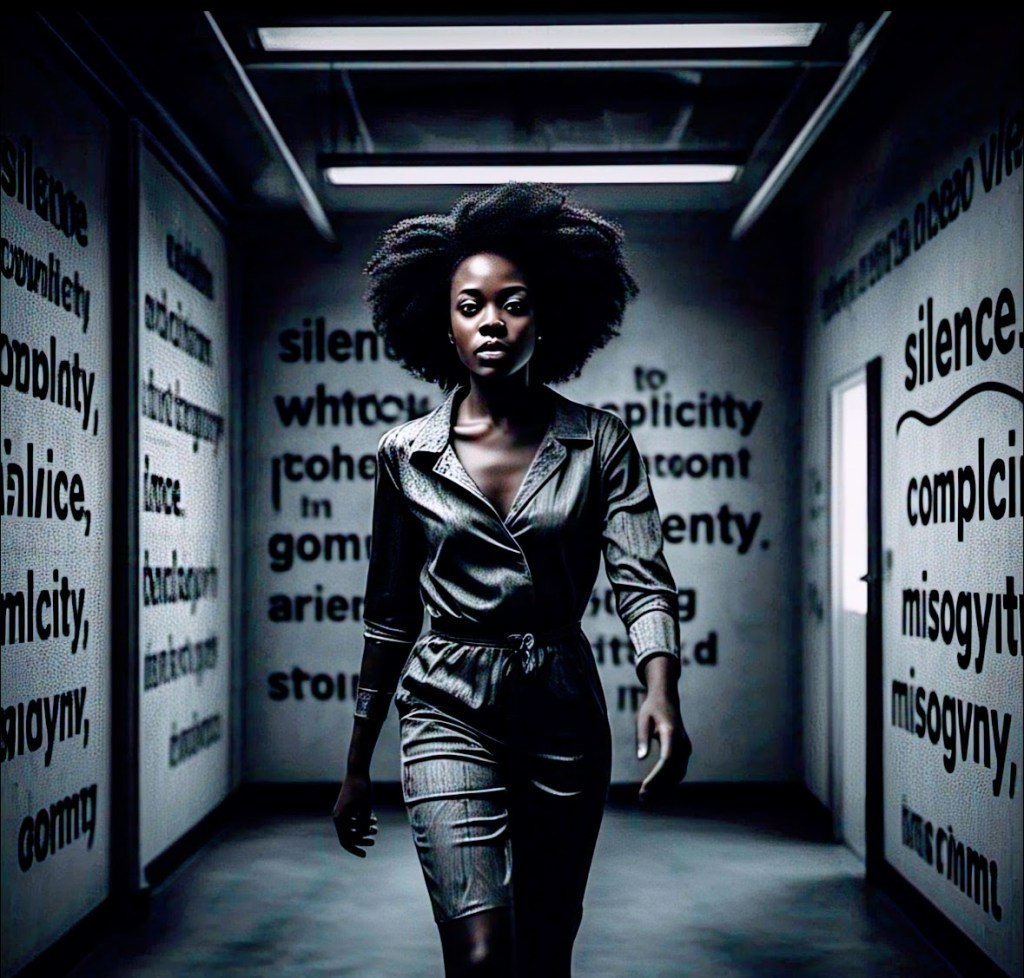
Image created with Microsoft Copilot.
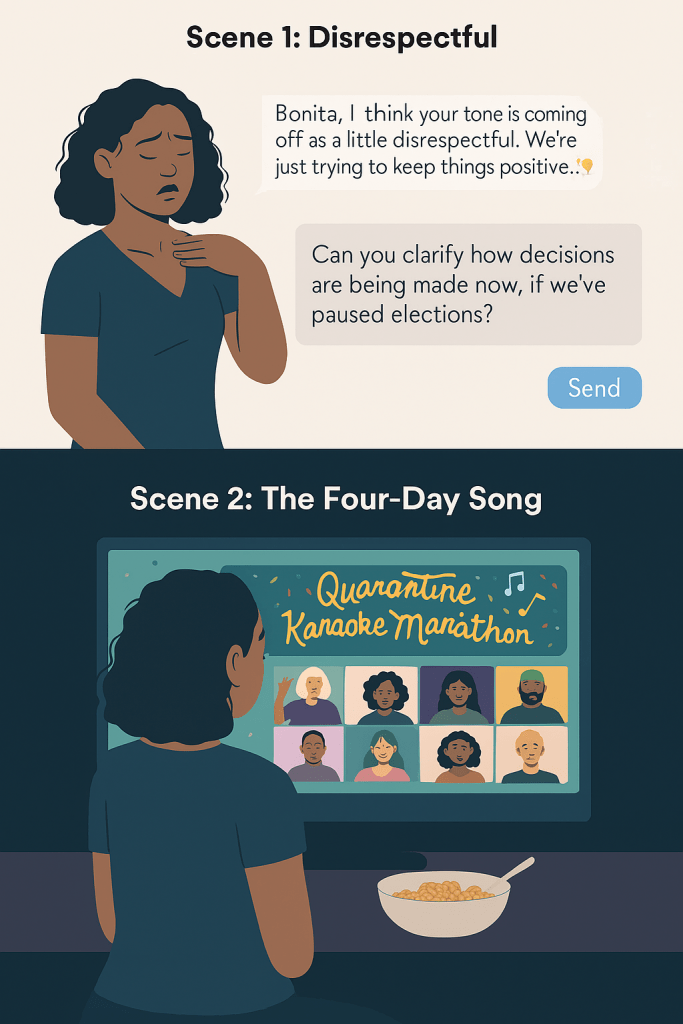
Scene 1: “Disrespectful”
I re-read the comment three times, just to make sure I wasn’t hallucinating.
“Bonita, I think your tone is coming off as a little disrespectful. We’re just trying to keep things positive. 💛✨”
Disrespectful.
That’s the word she chose. Not confusing, not misaligned, not worth further discussion. Disrespectful. Like I came in swinging.
I scroll up, just to check. All I did was ask:
“Can you clarify how decisions are being made now, if we’ve paused elections?”
That’s it. One sentence. No caps. No edge. No attitude. Just clarity.
And yet—here I am, being framed as the problem.
Because I asked for structure in a space built on vibes.
Because I challenged authority that didn’t want to be examined.
Because I spoke like an adult in a room that needed me to pretend confusion was collaboration.
I lean back from my laptop. My chest is hot, but I’m not panicked. Not this time. My mother’s voice doesn’t echo in my head. I don’t feel small. I feel… awake.
Because now I see it clearly: They don’t think I’m disrespectful. They think my clarity is disrespectful.
They’ve wrapped morality in language and it’s being used to cover structural mess. They’ve turned “positive vibes” into a shield. They’ve made honesty feel like an attack.
And here’s what cuts deep—they think this works. They think a heart emoji after a boundary will soften the harm.
But not anymore. Not with me.
⸻
[Comment Reply Box: OPEN]
I type slowly. No caps. No heat.
“I want to name that asking for clarity isn’t an act of disrespect. If this space only welcomes questions that come with applause, then it’s not a community—it’s a campaign.”
Send.
I don’t wait to see who reacts. I don’t watch for likes.
Because I didn’t write it to be agreed with. I wrote it so my body would stop shaking.
And sure enough—it does.
⸻
Image created with Microsoft Copilot.
Scene 2: “Unalone”
It’s 3:11 a.m. on a Friday and someone is singing alt rock like an anthem. Their mic is hot. Their wifi is worse. But you think we bout to call it a night? Nah.
There are twelve of us still on the Zoom call. Some are singing along. Some are half-asleep with cameras off. Somebody’s grandma is snoring in the background. And I’m sitting in the dark on mute, off camera, quietly crying into a bowl of Honeycomb cereal.
Because this? This feels spiritual.
Four days ago, this was a joke. A “Quarantine Karaoke Marathon.” Just a goofy challenge someone tossed into the chat. Break the world record or just break our voices trying. Whatever.
But then people kept showing up.
We started tracking turns. Started a host donation spreadsheet. Started learning each other’s favorite artists. I now know Aria Doyenne sings 𝙈𝙤𝙩𝙞𝙫𝙖𝙩𝙞𝙤𝙣 pretty much every time she’s logged on, but minus the rap of course. I used to sing it every now and then. But I’ve silently yielded the song to her. I know Dr. Rayna owns a string of LED lights. But if we ever met in real life, I’d only be able to recognize her forehead because that’s all I’ve ever seen on camera. I know Roxy sometimes moonlights as a comedian. Her innuendos and commentary are perfect fodder for the likes of 𝙏𝙝𝙚 𝙍𝙚𝙙 𝙎𝙝𝙤𝙚 𝘿𝙞𝙖𝙧𝙞𝙚𝙨 or 𝙏𝙖𝙭𝙞 𝘾𝙖𝙗 𝘾𝙤𝙣𝙛𝙚𝙨𝙨𝙞𝙤𝙣𝙨
And me? I haven’t felt this unalone since before September 2021.
We didn’t know what we were building. But we knew it was necessary.
The conversations between songs was everything. We laughed between performances. Offered encouragement. And listened more intently to anecdotes than any therapist charging by the hour.
Folks passed out mid-rotation, camera still on. I remember one night Zoom froze and kicked us all out—and without even asking, everybody scrambled to log back in.
It was raggedy and beautiful and exactly what I needed.
Bonnie was already gone.
And even though no one here knew her, everything they liked in me came from missing her.
⸻
Someone just called my name.
I wipe my face. Unmute. Breathe.
“Bo-niiita,” Abby says with a soft chuckle, “you ready?”
I am.
And I’m not.
And maybe that’s what this whole thing is about—singing anyway. Even when your voice shakes. Even when the world’s on fire.
Because for four days and counting, this group has made it feel like maybe we could save each other. Just by showing up. Just by staying on the call. Just by pressing play.
Somebody’s cousin live-streaming, hollering, “Damn, the microphone too?!”
[Narrator – Southern, emotionally dehydrated, and tired of explaining’ this man]
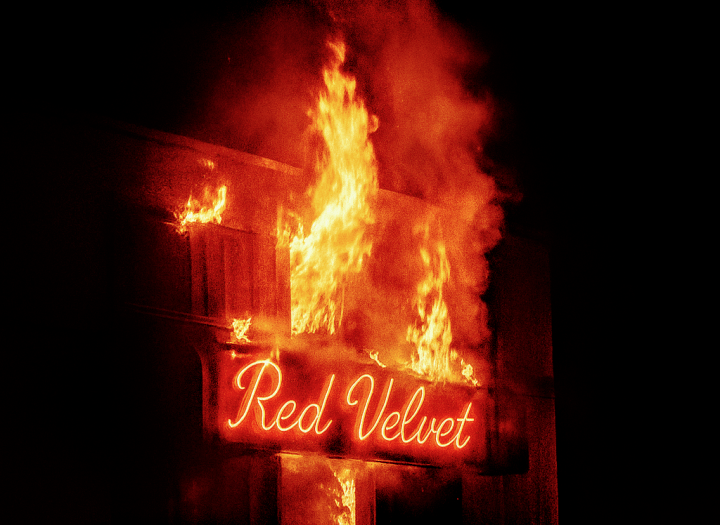
The Red Velvet is no more.
Burned down on a Sunday, like it was all part of God’s plan.
But this ain’t about the fire, tho.
We’re here to talk about Uncle Ray.
The man who made The Red Velvet more than a stage. The man who almost had Ray’s Boom Boom Room named after him—that is until pride, duck fat, and Luther Vandross got in the way.
[Bootleg Interview of somebody, still not sure who – parking lot, 2007]
“Ray?….phew! That man could sing about heartbreak like love still had a key to his place. Mmm! His falsetto had all kinda regret in it.”
[Backup Singer – name redacted]
He fell asleep mid-set once.
Mic in hand. Still didn’t miss a note.
Band ain’t stop playing neither. They knew better.
[Interviewer, sensing something in her voice]
“You and Ray….y’all got along pretty well… or…?”
She side-eyes the camera. Then smirks.
“See, now you askin too many questions.
But since you asked, you ain’t heard this from me, alright?” She leans in, like she’s about to whisper a secret. But doesn’t.
“Ray could sing heartbreak like he still hoped his woman’d walk right through them doors. Man sang ‘Superstar’ like he meant it…like that damn song was a mirror.
[short pause]
And now see—that was the problem.”
[Bar Regular – Newport lit, martini sweating]
“Ray’s Boom Boom Room?
Listen, that was s’posed to be his.
Name all on the napkins, Luther covers between catfish plates—all sung by Ray himself, mic still greasy from the kitchen. (Ashes cigarette)
And that cornbread? Ha, Lawd.
Duck fat. Not butter. (Nodding for emphasis) Mmmmmhmmm. Told me himself. Said it gave the crust ‘just enough crunch to make folks shut up and listen.’
Nah, but see, them investors, they got cute. That short, pudgy one with the slicked-back hair and the smile that ain’t quite reach his eyes—he gon tell Ray, ‘We’re going for a more… sophisticated demographic.’ Tried to swap his sweet potatoes for that dry mash with the whatchacallit—uh, nutmeg. Nutmeg and shame is what it was. Bleh! (Shaking head in stark disapproval) Who finna eat that?! Not me hunny.
And don’t even get me started on the music.
Said he couldn’t sing Never Too Much no more. Now, how you gon tell a man like Ray, what he 𝙘𝙖𝙣’𝙩 sing?? Said it wasn’t ‘modern’ enough for the brunch crowd.
Heh, BRUNCH (again, shakes her head).
Like heartbreak don’t hit before noon or some.
(Flicks cigarette butt, lights another).
Ray ain’t yell. He ain’t cuss.
Just took off his apron, left the mic warm, and walked out.
Got in that ol dusty Buick, with the two busted taillights lookin’ like two sad closed eyes, and a Luther CD stuck on loop, and drove straight here. The car mighta been trash, but the CD player and aux cord still worked. You know that’s all that mattered to him anyway. The music.
Now, the Red Velvet ain’t never had no food license or working air or nuthin’ like that.
But what it had was space.
Space for his voice.
And his recipes.
Space for a man who made grief sound and taste good.”
[Interviewer – off-camera, overthinking]
“But… you said… he left and drove straight her—”
“Yup. That’s whatta said. You can quote me suga.”
“The Boom-Boom Room…..isn’t that in Harlem?”
“And??”
“Well…., we’re in Florida….”
“I know where we at! Is you tellin’ the story or am I…?”
Interviewer pauses, exhales, lets her make it and lets the myth win.
“You are, ma’am. Nvrmnd. So, what else can you tell us about Uncle Ray?”
[Bar Regular – smirks, ashes slow]
“Everything or nothing, suga.
Depends on how bad you need the story.
But I will say this:
When Ray sang, you couldn’t tell the truth from a lie from the truth!”
[Neighbor – Miss Bernadette, Unit 3B]
“He used to live next door. Every Saturday. Right as I’d get ready to catch up with my reality stories —here he come belting Luther like he owned the whole damn block.
I called the police three times.
Them [BLEEP] brought lawn chairs and didn’t leave til 4 in the morning.”
[Narrator – now quiet, kinda confused, kinda nostalgic, but also just over it]
This isn’t a eulogy, okay.
Ray’s not dead. He’s very much alive and can be found at his favorite virtual karaoke lounge.
He just never went national.
But when he stepped onstage at The Red Velvet—
whether it was late,
or he interrupted you mid-sentence,
and even if he smelled like cooking grease and shea butter—
By the time he walked into The Red Velvet Parlor, I’d already seen ten men, smoked two cloves, and told one preacher’s son to stop calling on Jesus unless he planned to tip.
But him?He seemed like a man who didn’t come looking for flesh, but found it anyway. He came in carrying a saxophone case and that kind of sadness you only see in musicians and mothers. Said he didn’t need the usual—just wanted “company.”
Hmph. Okay. Miss Geneva’s girls knew to keep our mouths and minds sharp and our legs optional. But something in me softened when he asked, “You got time?”
Like time was something I owned.
I had time. What I didn’t have was peace.
“You read?” he asked me the second time he came back. I still had one heel dangling off my ankle. I’d just whispered somebody else’s husband into sleep.
“I read. I also charge by the hour. Which one you paying for?”
He smiled. Didn’t answer. Just pulled a worn copy of The Crisis from his coat pocket and handed it to me like a flower.
The first time he touched me that night, he apologized.
“You just seem too thoughtful for this,” he said.
I didn’t flinch. I’ve heard worse from men who cried after.
“And you seem too tender for war,” I said. “But here we are.”
He started reserving the hours after midnight. Called it “our time,” like the walls were on payroll and understood the assignment, keeping secrets and fools outside of 7B.
We’d lie in that creaky bed, me in nothing but skin and sarcasm, him in uniform pants and a hangover.
We’d talk Garvey, lynchings, gin, and grief—skin tangled, fused like the pages of a book soaked with rain. He’d trace the curve of my thigh like it was a map back to himself.
He liked how I spoke. Said I used words like they owed me rent.
One night, he leaned in like a secret and said, “I could stay here forever.”
I said, “But you won’t.”
He kissed my shoulder anyway.
A week later he told me he had to go. Military orders. Some excuse wrapped in patriotism.
I said, “So this your goodbye?”
He said, “This is just the last time.”
I laughed.
“You got a woman?” I asked.
He didn’t answer. Which meant yes.
Two months later, I saw him walking past The Red Velvet like he’d never been inside. Like he’d never been inside me.
As a soldier should.
The woman on his arm had careful hair—glossy. I could practically smell the heating oil and hear the hot comb hiss in the wisp of the afternoon breeze. A string of pearls sat like punctuation on her collarbone. Her skin tone paper bag compliant. She looked like respectability.
I wondered if she liked jazz.
I wondered if the lies she believed were as pretty as the ones he offered me.
Sometimes I still read The Crisis in the quiet hours between “company”. Still keep that same torn copy under my pillow, creased like a broken promise.
Men come and go. They all think they’re special for asking me what I think. It was their way of trying to separate themselves from the last one and the one before that. I’d learned that their interest in my mind was as temporary as their presence.
But only one ever stayed long enough to hear my answer.
I went to visit Bonnie today. Not at her grave. Not in some dusty photo album that smells like old paper and forgotten time. I went to her Facebook page.
Like I’ve done a hundred times before, just to see her name in that familiar font, just to pretend for a second that time hasn’t done what time does.
But it’s gone. Deleted. Like a light switch flipped off in an empty room. Like she was never here.
Grief, for me, looks like texting my iPad because Bonnie’s Facebook is gone— deleted like the last thread that held me together. Her number? It rings in someone else’s pocket now.
I’ve already reread all our messages— every joke, every “you got this,” every inside reference. She was my editor before the editor, catching my typos with a teasing, “You’re better than this,” pushing me past the easy words, telling me, “This part is good, but you can go deeper.” She never let me play small.
Now, even those messages are gone. I thought I’d have them forever, like a stack of letters folded neatly in a shoebox, waiting to be opened when I missed her most. But grief doesn’t let you keep things.
It looks like sending a meme at 1:11 a.m., a “good morning” voice note at 7:06, a long text at 6:27 p.m.— watching each message flicker from “delivered” to “read” not because she’s alive, but because I’m basically talking to myself.
These texts go nowhere. But I send them anyway. Like tossing notes into the ocean, hoping maybe Heaven has a newsfeed.
I write my ache into these apps, where people scroll past pain like it’s content. Where grief becomes engagement. Where honesty only gets “likes” if it’s in the photo caption of a pair of tiddies.
I crave connection— real, ragged, late-night I see you connection. But I loathe the curated theater of digital belonging.
Because none of it fills the space she left. None of it hands me back her laugh, her proofreader’s pen, her steady faith that I could go deeper.
And yet, I’m not left empty. Memories stay behind— a gift and a curse. They bring her back: the way she left cat hairs in my passenger seat, signed every message with an otter and a heart, never hassled me about being late, the way she saw me even when I couldn’t see myself. But only to remind me she’s gone.
And making new friends in your 40s feels like trying to heat a home on Lakeshore Drive in January with just a candle and a memory— a warm memory of a Deep Ellum stroll on an August night.
Bonnie’s gone and now I’m in a Sisyphean struggle with grief, time, and loneliness
So I write. Because if I can’t hear her voice, I can at least let mine carry the parts of her I refuse to forget. The jokes, the wisdom, the echoes of her belief in me. She used to proofread my words, but now, writing about her is how I hold on.
What wounds me deeper than missing the dead is whispering to the living and getting silence back.
The “social” in social media don’t feel like socializing anymore— it feels more like strategizing.
There are versions of me that only existed in her presence. Versions of me realized only because she was here. And if I stop speaking her name, if I stop telling our stories, then I lose those parts of me too.
I still think about texting her. Still wonder what she’d say if I could.
Maybe that’s enough. Maybe memory is its own kind of forever.
I’ve spent years being the strong one, but today I cried because no one noticed I was quiet.
There’s this thing I do. Every few weeks—sometimes days—I’ll open one of my social media apps with full intention. Not just to scroll, but to say something. Maybe something funny. Maybe something meaningful. Maybe something soft. But then I stop. I hesitate. And it hits me like a wave and a whisper at the same time: Why?
Why post into a void where folks barely acknowledge the echo? Why offer up some layered, honest truth to people who’ll skim it, maybe like it, maybe not—but rarely engage it with the kind of tenderness or thought I put into writing it?
And worse: Why bleed on the page for people who won’t even whisper that it reached them?
It’s not the applause I want—it’s the quiet nod from someone who felt it too. What’s the point of being bare if the room pretends not to see you? Why offer visibility to folks who only see you when you’re glowing, not when you’re grieving?
I’ve ask myself these questions enough times that it’s begun to reshape the way I view connection. Not just online—but everywhere.
Here’s the truth I don’t like admitting out loud:
I don’t reach out much either.
Hell, I ghost. I vanish. Though I think of people often, I go on long walks inside my own head and forget to send the “thinking of you” text. I take social media breaks like medicine—stepping away because the noise is too much and the silence is somehow worse. And then I have the nerve to feel hurt when people mirror that same energy back. When my absence isn’t noticed. When my return is met with digital shrugs or stale scrolling.
It’s a bitter loop.
And somewhere in that loop, the guilt shows up. The what if it’s me? spiral.
What if they’re not being distant—I’m just hard to love?
What if I’ve trained people not to expect much from me, and now they’re just playing their part in a pattern I wrote?
And then comes the worst part of all—the shame. The kind that curls around my ribs and whispers, Well, maybe you’re just not worth the effort.
But no.
That shame is lying. And I’m learning to talk back to it.
Because yes, I have distance in me. Yes, I have walls. Yes, I disappear sometimes. But so do most people with deep wounds and soft hearts. So do those of us who’ve been taught to love quietly so we don’t scare folks away. So do the ones who’ve been “the strong friend” for so long we don’t even know how to ask for softness without apologizing for it.
And here’s the hard-earned truth I keep circling back to:
Behavior is communication.
And the way people treat you is how they feel about you.
If they act like they don’t care, it’s because they don’t care—or they don’t know how. And while one of those is forgivable, neither one is nourishing.
Not for me. Not anymore.
I’m not interested in decoding people’s silence.
I’m not studying half-hearted energy like it’s gospel.
I’m not translating crumbs into feasts just to justify my presence in someone’s life.
Because I’ve done that already. For years. For decades. I’ve made people mean more to me than I’ve ever meant to them. I’ve leaned in when they leaned out. I’ve convinced myself that effort is too much to ask for—and that being understood is a luxury I can live without.
But I can’t.
Not anymore.
Not without breaking something sacred inside me.
So now, I’m listening. To behavior. To patterns. To energy. To silences that used to confuse me but now speak fluently. I don’t hate the people who drift—I just accept it as an answer. I don’t need closure from every friendship or situationship or almost-love that fizzled out. I just need truth. And behavior, whether we like it or not, is where truth lives.
But this isn’t just about other people. This is about me too.
About the ways I’ve pulled away before I could be pulled on.
About the way I’ve chosen invisibility to avoid rejection.
About how I’ve made social media a place of performance instead of connection—because the performance feels safer.
So here’s my reckoning:
Yes, people treat me how they feel. But I also teach them how to treat me.
And if I’ve been inconsistent, unreachable, or too guarded, that’s worth owning—not shaming myself over, but owning.
Because now, I want more. Not louder friends. Not performative engagement. But reciprocity. Emotional fluency. Safe spaces where I don’t have to wonder if I’m too much or too little—where being seen doesn’t require me to shrink or sparkle.
And maybe, just maybe, that means I have to show up differently too.
Not for everybody. But for the ones who matter. For the ones who try.
For the ones who, like me, are learning to be present on purpose.
So I’m not done posting. I’m not done reaching. But I’m done pandering.
Done hoping strangers will clap for my healing.
Done over-explaining to folks who only show up out of curiosity, not care.
I’m writing for the ones who get it.
For the ones who feel what I mean without needing it filtered.
And if that means fewer hearts and more wholeness?
To lead. To take up space. To move through the world unchallenged—
A man only needs other men.
Writer Celeste Davis put it plainly:
“The sad truth is that men don’t NEED to like or respect women to successfully or safely walk through the world. Not at all. In men’s daily lives—in their jobs, in their church, in their friend groups—social capital is gained solely through other men.”
I have known this for years.
But nothing made it clearer than a Facebook group called Studio 5191—
a space I had been in since 2022,
a space run by three cisgender heterosexual Black men I consider friends,
a space where I thought my voice mattered.
I was wrong.
The Lie of Free Speech Is the Comfort of Men
They spoke freely and often.
One used the word c**t to break a woman apart.
Not in jest.
Not in irony.
Not as a whisper, but as a hammer.
Not just once, but four times.
And I called it out.
Not because I expected an apology, but because I was tired.
Tired of watching men talk about women with contempt and call it a conversation.
Tired of the laughter.
Tired of the silence.
But silence was not the only response I got.
Ben, an admin, told me,
“As we have said before, we do not delete ANYONE’s posts. We debate views and opinions, we do not edit them. We won’t change people’s minds by censoring their opinions.”
I was supposed to accept this.
As though misogyny is just an opinion.
As though dehumanization is something to be debated.
But free speech isn’t a shield against accountability. Even Iowa State University acknowledges this:
“Just because there is a First Amendment right to say something, doesn’t mean it should be said. The First Amendment protects a right to say hateful things… However, as a campus, we can all work together to promote and ensure an environment where all students, faculty, and staff are welcomed, respected, and supported.”
Studio 5191 is far from an institution of higher learning. Still, it wasn’t working to build an environment that thrives on mutual respect. They were upholding the kind of free speech that only serves one side—theirs.
Because the truth is, when they invoke “free speech,” they don’t mean open dialogue.
They mean unchecked power.
And that power wasn’t just in their words. It was in who was allowed to speak freely and who wasn’t.
Who was heard. Who was dismissed.
Because free speech in Studio 5191 meant that some could say anything—
They could degrade women.
They could be transphobic.
They could attack people under the guise of “just a joke.”
But when I challenged those ideas? I was told to just leave my comment and move on. I was told not to look at other people’s responses. Not to engage. Not to challenge.
Free speech was never free for me. It came with limits. Rules. Warnings.
Not for all. Only for me. The one who was challenging bigotry.
And again, Ben laughed, and dismissed me outright:
“You’re the only one trying to check someone else for how they talk. You love DMX, but he said ‘fggot’ this and ‘btch’ that. At the end of the day… this is SELECTIVE OUTRAGE! Go in peace, love!”
They say “Free speech!” They mean “Shut up!”
And still, I tried.
I messaged the man who used the word c**t.
I asked if we could talk. I gave him the choice to say no. I told him I would respect his boundaries.
And when he responded, he made it clear:
He had no interest in reflection.
“Wont really change much tbh. Playin’ victim mentality on topics about women is closed-minded.”
“Post something about dudes being trashy to women, and I’ll clap on the dudes too.”
“You don’t understand who I am, and that’s not my problem. Like I said its always the same story with you. Always jumping on everyone’s ass about anything involving women even if the chick in the post deserved it. Been like that since I joined and I dont post much cus of you.”
I apologized to him.
For calling him out.
For putting him on the spot.
For making it personal.
I told him I valued him. I told him I wasn’t asking for his punishment, only for him to consider why his words mattered.
And still, he took zero responsibility.
He never once mentioned his own words.
Never once engaged in self-examination.
Never once considered that he was wrong.
To him, the issue was never his misogyny.
The issue was me, for daring to challenge it.
And that’s when I knew.
I was the problem.
Not the man who spat the word c**t like it was his right.
Not the men who let it slide.
Not the ones who laughed.
Me. For saying something.
Because the truth was never that they “debated views.”
The truth was:
Men protect men.
Men excuse men.
Men make women the problem for resisting.
They called it a debate forum.
A space to stir the pot, to spark critical conversations.
A place where no opinion was off-limits.
The lies they tell. The lies I believed.
Studio 5191 is not a debate forum. It is a shitposting group, a place to throw around absurdities, jokes, memes, and insults like loose change. And like many online spaces run only by men, the humor came at the expense of women.
I pushed back. Again and again.
Against misogyny. Against transphobia. Against the ways they disguised cruelty as conversation.
One man jokingly proposed violence against a woman in a post. An admin, we’ll call him Jeffery, loved the comment and suggested the man be rewarded.
And what happened?
I was policed.
Ben, the admin who laughed off my frustration, once told me not to look at the comments before or after mine.
Just leave my thoughts and walk away.
Just drop my words into the void and let the men have the last say.
Just be quiet unless I was speaking to no one.
I was told not to challenge the words of others.
I was told my presence kept others from commenting and participating.
So if they stopped talking, it’s my fault?
But the men sharing this content?
They were free.
They were free to say whatever they wanted.
Free to post transphobic content, make fatphobic comments without consequence.
Free to degrade women in “jokes.”
Free to be as loud as they wanted—as long as I was quiet.
And when I named their transphobia, when I called it what it was, Jeffery responded the next day. Not with diplomacy. Not with accountability.
Instead, he created a post about how we should not attack people’s ideas.
He did not tell the men to stop dehumanizing trans people.
He did not tell them to think before they spoke.
He indirectly told me to stop challenging them.
Because in that space, disagreement was only dangerous when it challenged hate.
Now, looking back, I see it clearly:
They have been policing me for years.
They do not like a woman who challenges their bigotry.
They do not like a woman who does not step softly within the spaces they control.
They do not like a woman who dares to hold a mirror up to their comfort.
They do not like a woman who refuses to shrink.
The Women Who Stay Silent
But it wasn’t just the men.
It is never just the men.
It was the women who participated,
who read the same words,
who saw the same violence,
and said nothing.
I was not just fighting men.
I was fighting alone.
So I spoke. And finally, a woman spoke back.
Not in defense of me.
Not in defense of herself.
Not in defense of the women who would come after us.
She spoke to tell me she did not like being lumped in the generalization.
She had not seen the comments, she said.
She had not known.
She did not like feeling accused.
My words—sharp, but not cruel.
Firm, but not unjust.
Still, they hurt her.
And because she was hurt, she could not hear me.
I apologized. Not because I was wrong. But because she is my friend.
Because that is what women do.
We soften.
We smooth.
We take the jagged edge of a truth and dull it against our own skin so it does not cut too deep.
I reminded her that this was not the first time.
That I had spoken before.
That she had dismissed it because she felt safe.
That she had always been heard.
That she had deemed the misogyny as meaningless trolling or differences in personality.
Nothing to take seriously.
I reminded her that when a man disrespected me in front of her, she defended him.
“He didn’t mean it that way.”
And I let it go.
Because I didn’t want to be the woman who made things difficult.
The woman who could not take a joke.
The woman who made everything a fight.
And now? Now that I was speaking up yet again?
She was the one who was hurt.
That is what gets me.
She had no voice for the men.
But she found it for me.
She had nothing to say about their misogyny.
But the moment I named her silence, she spoke.
There are other women in the group who said nothing.
At least she spoke.
But when she spoke, what did she say? Who did she speak to? What did she speak to?
And suddenly, this was no longer about them.
No longer about the man in that group using c**t like a weapon and daring us to flinch.
Now, it was about her feelings.
And just like that, I was apologizing.
Again.
The Burden of Being a Black Woman in This Fight
Silence is never just about gender. It is about power—who holds it, who fears losing it, who stays quiet to keep it. Reilly’s privilege isn’t just in the color of her skin; it’s in her refusal to see, to speak, to stand. And maybe she thinks that silence will keep her safe. Maybe she believes she can watch without consequence. But privilege is fragile. It lasts only as long as you play by its rules. The moment she challenges the bigotry, the moment she keeps naming it for what it is, she will learn what Black women have always known:
Speaking costs.
It costs comfort. It costs belonging. It costs the benefit of the doubt.
As a Black woman, silence for me is a betrayal, but speaking is a risk. A risk of being dismissed. A risk of being labeled angry, difficult, too much. A risk of being told that the real problem is not the violence, not the bigotry, but the fact that I dared to name it.
I have seen this before.
Too many times.
It is the same pattern written over centuries, inked in the pain of Black women.
Where white women’s comfort and discomfort will always weigh more than our suffering.
Where we are asked to be the ones who fight, the ones who scream, the ones who refuse to let injustice sit in the quiet.
And they?
They are the ones who stay pleasant.
The ones who do not disrupt.
The ones who benefit from the battle without ever having to raise a fist.
And when we turn to them, when we ask them to fight alongside us, suddenly we are the problem.
We are too much.
We are angry.
We are the ones who must apologize.
And it cuts.
She benefits both from her silence and my voice.
And it cuts deep.
Reilly is my friend.
I know she cares about me.
That is what makes this hard.
But caring is not the same as standing beside me.
Caring is not the same as speaking when it is inconvenient.
Caring is not the same as choosing justice over comfort.
I can love her and still be furious.
I can love her and still know that when it mattered, she used her voice against me instead of for us.
I can love her and still ask—
Will she sit with this truth, the way I have had to sit with hers?
The Radical Act of Liking Women
Even my fiancé struggled with this.
He once called Studio 5191 a safe space for him. And as a Black man, it was.
Men did not challenge him there.
Men did not question his presence.
Men did not make him prove his worth before he spoke.
And when I left, he stayed. Not because he agreed with what was happening, but because he needed to decide for himself.
He wrestled with it.
Was it possible to fix something from the inside?
Could he make them see what I saw?
Could he investigate without becoming complicit?
And for a while, he thought about trying.
He addressed the admins directly.
He challenged them to deal with the misogynistic language.
But when the admins doubled down and defended the man’s right to use the word c**t as though it was some noble act of free speech, that was the last straw.
Because even in a space where he was safe,
He could not pretend it was safe for me.
And if he had to choose between protecting his comfort and standing with me—
He chose me.
I love Jason because he actually likes women.
Not just me.
Not just the women he desires, the women who fit neatly into his life.
Not just the ones who serve him, flatter him, need him.
He likes women. Plural.
And that should not be radical.
But it is.
The Truth They Don’t Want to Face
They don’t have to like us.
They don’t have to respect us.
They don’t have to see us as fully human.
And still—they need us.
Not just to push them toward growth.
But also to feed their contempt.
Because what is a group like Studio 5191 without women to drag, mock, humiliate?
Who do they bond over if there is no woman to use as a virtual punching bag?
They don’t have to like women.
But without us? They are starving.
And Studio 5191 is proof.
Once, it had 250 members. Now? 86.
And of those? Maybe 7, maybe 10 people actually participate. Now, there are two less.
I was told that I was the reason people didn’t want to speak.
That I was making the space uncomfortable.
That I was too much.
But am I really that powerful?
Or is it that people refuse to engage in a space that’s rotten?
They can call it a debate forum.
They can call it free speech.
They can say that I was the problem.
OR, perhaps there’s a truth more simple:
People saw what I saw.
And they disengaged or walked away, too.
Now, all that’s left are fruit flies and the ones who refuse to smell the decay.
And the men are left to lead, unchallenged by those remaining.
I don’t believe that all men are misogynistic. But I wonder if most believe men should be in charge.
Society does not require men to like women or respect us to lead. They do not have to love us to own us.
A man moves through this world untouched by the weight of his disregard, because another man will always co-sign his indifference—while a woman consents in silence. But once you raise a mirror, flinching at her own reflection, she opts to fight the image, not the truth.
“It’s not my problem,” she shrugs.
“He ain’t talkin’ ‘bout me,” she claims, self-righteous.
“Can’t you take a joke?” she minimizes.
“Ay, Ian in it.” She waves it off. “That’s you!”
Her cowardice—casual, reckless, smug.
And those remaining in Studio 5191?
The men leading do not have to like women.
And they don’t.
The women participating or sitting idly by are rewarded with a sense of belonging for not liking women.
TLDR: In Slow Down, Bobby V’s lyrics highlight the persistent focus on women’s physical appearance. Despite claims of wanting to “get to know” her, he’s drawn to her looks first. This reflects a larger issue where men often reduce women to their outward appearance, ignoring deeper qualities.
Why I Do This & How I Do It
I love breaking down lyrics. There’s something about unpacking the layers of a song—the words, the imagery, the emotions—that feels like solving a puzzle where the answer isn’t as important as the journey itself. It’s why Thick Cannon exists in the first place. I write to explore, question, and pull at the threads of culture, art, and human nature. Anyone who knows me or is somewhat familiar with my work knows themes like authenticity, vulnerability, womanism, and hypocrisy are my niche. This breakdown? It’s right in that pocket.
My approach is far from casual. I don’t just throw on a song and start typing. I’m not here to discuss the music, that’s not my expertise. I’m a words person. I listen to the track no less than three consecutive times before I even think about putting words to paper:
First listen? Undivided attention. No distractions. Just me and the music.
Second listen? I honed in on the lyrics. What images pop up? What emotions rise to the surface?
Third listen? I get up and move. Because movement stimulates thought, and sometimes your body understands a song before your brain does.
Then I write down the lyrics word for word because something about seeing them on paper makes patterns emerge. If a particular word stands out, I’ll dig into its meaning. Only after I’ve done all this do I watch the music video and finally check Genius for outside interpretations—just to see if I missed something or if my instincts were spot on.
This time, I’m doing it at the request of a friend. So let’s get into it.
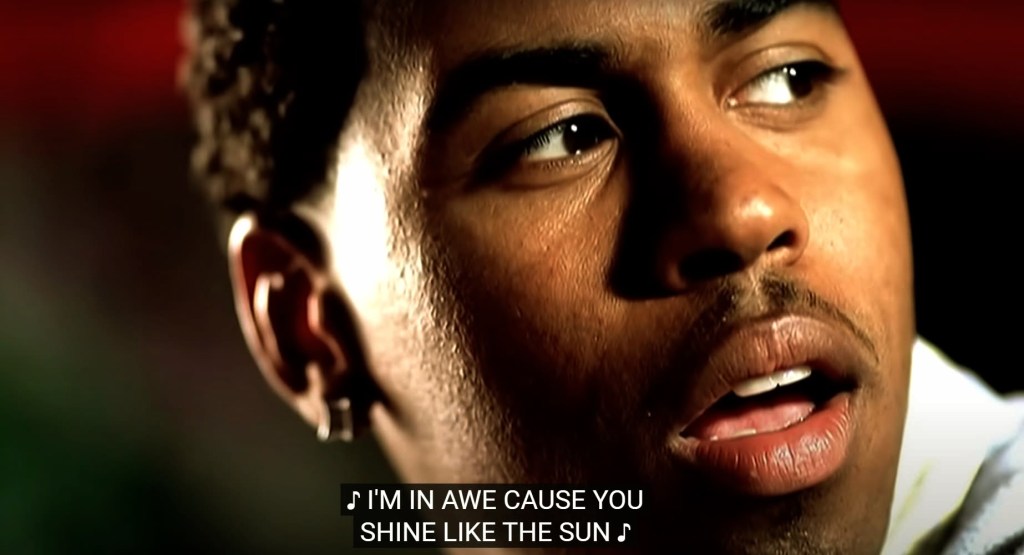
Somewhere in the early 2000s, before Instagram made thirst-trapping1 a sport, Bobby Valentino dropped Slow Down—an R&B anthem dedicated to that universal moment when a man sees a fine woman in passing and decides, Nah, I gotta say something.
On the surface, it’s a smooth song about admiration. He’s mesmerized. He’s in awe. He just wanna get to know her! But when you listen and pay attention to the lyrics, there’s a lot more happening here—mainly a battle between admiration and objectification with a side of Please don’t turn around before I finish checking you out. Let’s approach this with respect and fairness.
Let’s break this down.
The Gaze: “Did I See What I Think I Saw?”
First, we gotta talk about the setup:
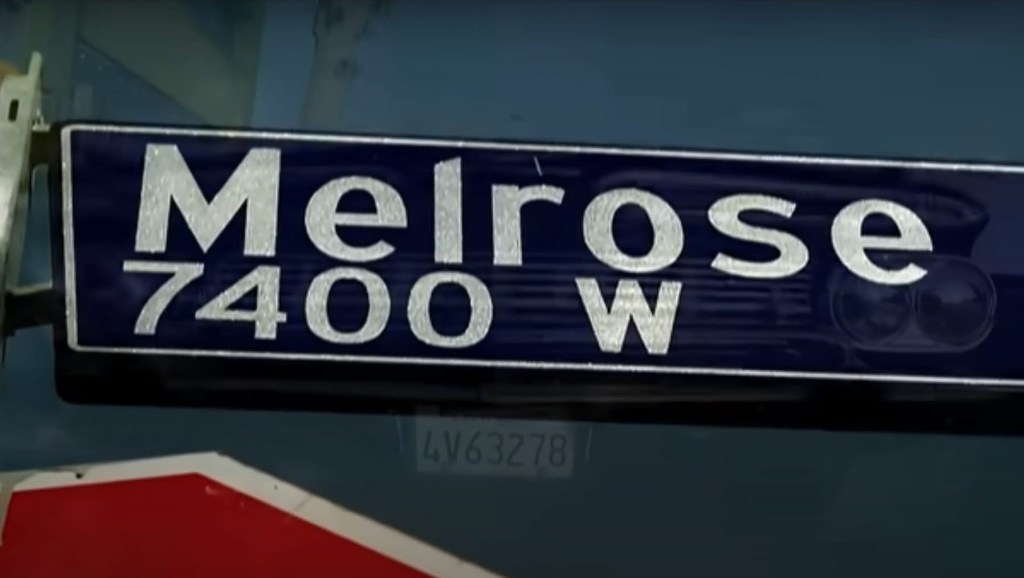
“I saw you walking down on Melrose
You looked like an angel straight out of heaven, girl.”
He sees her from a distance, and immediately, she’s celestial. Ethereal. Divine. Already, she’s not just a woman—she’s a whole experience. But here’s the thing about admiration from afar: it can be deceptive. It’s easy to romanticize something you haven’t actually seen up close.
Which brings us to this little gem:
“Slow down, I just wanna get to know you
But don’t turn around ’cause that pretty round thing looks good to me.”
Sir.
This is the polite thirst I was talking about. On one hand, Bobby V is saying, hol’lup, hol’lup, I wanna talk, I wanna know you as a person! But also, please let me finish staring at your ass first because that thang so nice I just had to chase you down.
It’s giving chivalry with a side of erection.
I get it, tho. He gotta get a closer look. From a distance, honey was flawless—but maybe that was just the right angle, or was it imagination, or good lighting perhaps. He had to get closer to see if what caught his eye was the real deal or just a well-placed illusion. I mean, what if, up close and personal, the vibe ain’t vibing?
The Setting: An ATL Boy on Melrose
Now, let’s talk about the location—Melrose Avenue in Los Angeles, CA. Melrose is not just any street but a whole scene—high fashion, designer boutiques, and people stepping out just to be seen. It’s where you go when you’re about your look, status, and presentation. So it’s no accident that an ATL boy like Bobby V is mesmerized by a woman here. He’s captivated by her. But is he really seeing her—or just what she represents? Think about it, what kind of woman is likely out on Melrose? She’s either shopping or flexing; either way, she’s moving with intention. And this is where the irony kicks in—men love to talk about how women are materialistic, then turn right around and pursue women in spaces designed for luxury and appearance. It’s this kind of irony that makes the song so complex.
Suppose he’s drawn to her because of how she looks and carries herself. Isn’t he already engaging in that same materialism?
Is he seeking a woman of substance, or is he caught up in the allure of arm candy—the kind of woman who fits the trophy aesthetic?
Because if this is about “getting to know” her, why is the setting so specific? Nothing in print shows up by accident. This might be a different song if she had been walking through a park or coming out of a bookstore. But Melrose? That’s telling.
So the real question is—does he even realize who or what he’s chasing?
Turn Around and Bless Me: The Face as the Final Test
Once he confirms that the body is, indeed, bodying, he gets to the next phase:
“Slow down, never seen anything so lovely
Now turn around and bless me with your beauty, cutie.”
This right here? This is the moment he needs to see her face.
Not because he doesn’t believe she’s fine but because this is the final validation stage. The body caught his eye, but the face determines whether this is a complete package situation. The male gaze operates in layers—first, is she fine? Second, is she fine fine?
And if she does turn around, what happens then?
Now we’re in the ultimate test: Can she talk?
Will she meet the expectations he built in his head?
Or will the conversation kill the fantasy?
Because here’s the part men don’t always say out loud—sometimes, attraction is about the idea of a person more than the person themselves.
And this is where the contradiction of Slow Down really comes to light.
The Hypocrisy of Pursuit
This man is having an internal battle. He’s caught between wanting to be respectful and needing to admire the entire situation before engaging. There’s an unspoken power dynamic at play here:
I need to assess you before I approach you.
I get to decide whether this attraction is worth my time.
It’s wild because women don’t even get a say in how we’re perceived—we’re just out here existing. Suddenly, we’re a moment for a man to stop, reflect, and run a full diagnostic test. All this before we’ve even said a word. And even when we pass every checkpoint, what happens next? Does he approach with genuine curiosity, or was the whole thing just a visual appreciation moment? I’m just saying—if she did slow down, would he even know what to say or do with her?
Final Thoughts
Attraction is funny. One minute, you’re captivated; the next, you’re lowkey evaluating like it’s a job interview. Bobby V is smooth with it, but Slow Down exposes something real:
A lot of men don’t just admire women. They inspect them.
And maybe that’s the real question—when does admiration turn into property assessment? When does “I just wanna get to know you” actually mean I just wanna confirm if my fantasy is real?
Because let’s be honest—was he really stopping her for conversation?
Or was he just chasing an image up close—like adding another seven digits to his collection, a potential jackpot, proof that taking the gamble of pursuit might actually pay off?
The entire song contains 502 words, and Valentino references her looks 65 times using words related to appearance.
Bobby Valentino makes about 10 references to getting to know her beyond just her looks. These moments are subtle and often wrapped in poetic language, but they include:
“I just wanna get to know you” (Repeated in the chorus) → This suggests he wants more than just visual admiration.
“Come take a walk with me; you’ll be impressed by / The game that I kick to you; it’s so thorough and real.” → Implies he wants to engage in conversation and show his personality.
“Like a flower fully bloomed in the summertime, you’re ready / To be watered by this conversation, hope you’re ready” → A metaphor suggesting he sees her as someone ready for meaningful dialogue or connection.
“Let me be the one to enjoy you.” → This could imply more than just physical enjoyment, though it’s vague.
This obsession with female beauty isn’t novel. From Aristotle to the Bible to social media, men have always been drawn to looks first—sometimes to the exclusion of everything else. The idea that “men are visual creatures” has ancient roots. Philosophers like Aristotle (4th century BCE) and Plato discussed the power of sight and beauty in shaping human desire. In many early cultures, a woman’s appearance was often linked to her worth, especially regarding marriage and social status. Religious texts, including the Bible (e.g., Jacob, King David, Samson) and Confucian teachings, also emphasize men being drawn to visual appeal. Evolutionary psychology reinforced this idea in the 19th and 20th centuries, arguing that men are biologically wired to prioritize physical attractiveness as a sign of fertility.
And maybe that’s the problem. Slow Down dropped in 2005, and nearly 20 years later, men are still out here acting like if a woman isn’t visually stunning, she’s not worth their time. It’s wild how little has changed. Social media has only made it worse—now, the “pretty round thing” isn’t just catching his eye on Melrose; she’s on his feed 24/7, filtered and curated for maximum appeal. Meanwhile, women are expected to perform beauty at all times or risk being ignored, dismissed, or even insulted.
It begs the question—when men say they want to “get to know” a woman, do they really mean her, or just the fantasy they’ve built around her looks?
What are your thoughts?
Thirst trapping—the act of posting provocative or attention-grabbing photos, videos, or content to reel in admiration, compliments, or validation—wasn’t as easy as throwing up a selfie with the right filter and waiting for the DMs to roll in. The term “thirst” refers to desire (whether for attention, attraction, or intimacy), while “trap” suggests luring people in. It doesn’t always have to be explicitly sexual, either—it can be about flexing confidence, beauty, or status. A gym selfie, a well-styled outfit, even a deep, moody caption with just the right smolder. And while thirst trapping is usually playful and intentional, sometimes people get accused of it even when that wasn’t their goal. ↩︎
If you ain’t peeped game yet, the Super Bowl halftime show ain’t just about music anymore. Over the years, it’s become a stage where some of the biggest artists in the world slip in a message, a protest, or straight-up cultural defiance—right in front of one of the most mainstream, corporate, and historically conservative audiences in America. And the best part? It keeps getting bolder. But how did we get here? How did a performance that used to just be marching bands and feel-good pop moments turn into something that forces America to look in the mirror? Let’s run it back.
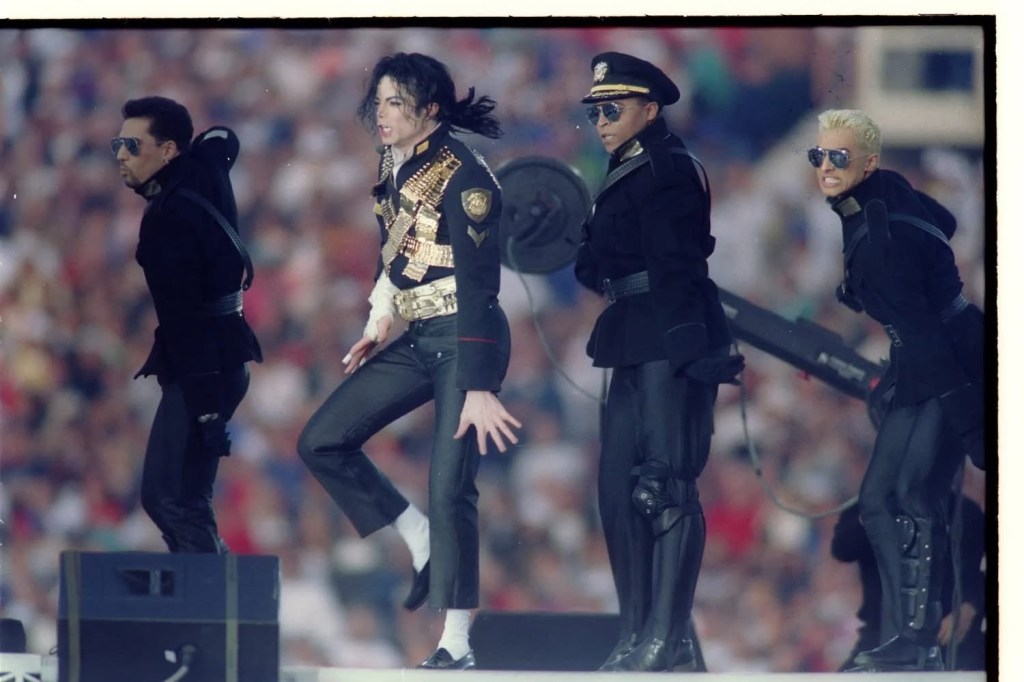
1. Michael Jackson (1993) – The Blueprint for Something Bigger
Before MJ touched the stage, Super Bowl halftime shows weren’t even a thing—just a lil’ break for snacks and bathroom runs. But when he opened with a dramatic, motionless stare into the camera, commanding an entire stadium’s attention before launching into Black or White and Heal the World, he changed the game. MJ wasn’t just entertaining; he was making a global statement about unity, anti-racism, and humanitarianism. In a country that had just endured the LA Riots the year before, that was a moment. He was reminding the world that Black culture is American culture, and if America wanted to claim him as their “King of Pop,” they had to claim the message, too.
2. U2 (2002) – A 9/11 Tribute with a Nationalist Undertone
The nation was still raw from 9/11. U2’s setlist—Beautiful Day, MLK, and Where the Streets Have No Name—was pure grief and resilience wrapped in rock & roll. But the real statement? The names of 9/11 victims scrolling behind them like a modern-day Vietnam Memorial, and Bono opening his jacket at the end to reveal an American flag. Was it emotional? Absolutely. But also, a very calculated moment of patriotism, framing America’s pain as a unifying force. Given how 9/11 was already being used to justify wars and surveillance policies, this halftime show—whether intentional or not—played right into the era’s post-tragedy nationalism.
3. Beyoncé (2016) – Black Power at the Super Bowl? Oh, the Audacity.
This was the moment that had conservatives frothing at the mouth. Beyoncé came out in a Black Panther-inspired fit, her dancers rocking afros and berets like they were straight outta 1968. And the song? Formation. The same track where she sings about loving her “Negro nose” and references Hurricane Katrina? Beyoncé was NOT playing. This was Blackness, unfiltered, unbothered, and unapologetic—right in front of a country that only tolerates Blackness when it’s profitable or palatable. She knew exactly what she was doing, and the backlash proved it. Police unions even called for a boycott, because apparently, singing about police brutality and Black pride was too radical for a halftime show.
4. Lady Gaga (2017) – “Subtle” Shade in the Trump Era
A year after Beyoncé set it off, Lady Gaga pulled a move that was quieter but still loud if you were paying attention. She opened with This Land Is Your Land, a song often used as a protest anthem against oppression. Then she slipped Born This Way into the mix, a direct nod to the LGBTQ+ community at a time when Trump’s administration was rolling back LGBTQ+ protections. She didn’t outright call out Trump, but her setlist spoke for itself. The message? America belongs to all of us. Deal with it.
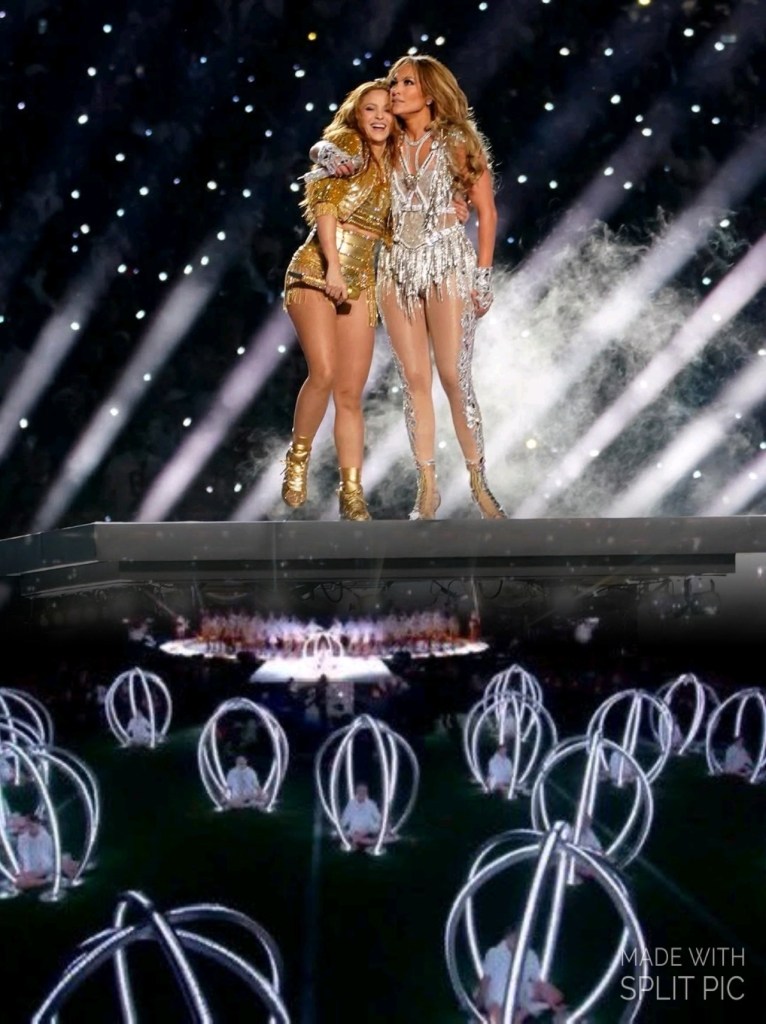
5. Shakira & Jennifer Lopez (2020) – Latin Pride & the Immigration Crisis
Now THIS was one for the culture. Shakira and J.Lo weren’t just celebrating Latinx excellence—they used their moment to highlight the struggles of their communities.
J.Lo’s daughter sang Born in the USA while kids sat in glowing cages—a direct reference to Trump’s immigration policies and the children detained at the border.
Shakira, a Colombian-Lebanese artist, showcased Arabic influences in her dance, subtly reminding folks that Latinx identity is deeply diverse.
And J.Lo throwing on that Puerto Rican flag cape? A moment. Given how Puerto Rico has been treated by the U.S. government (read: like an afterthought), that was a statement of identity and resistance.
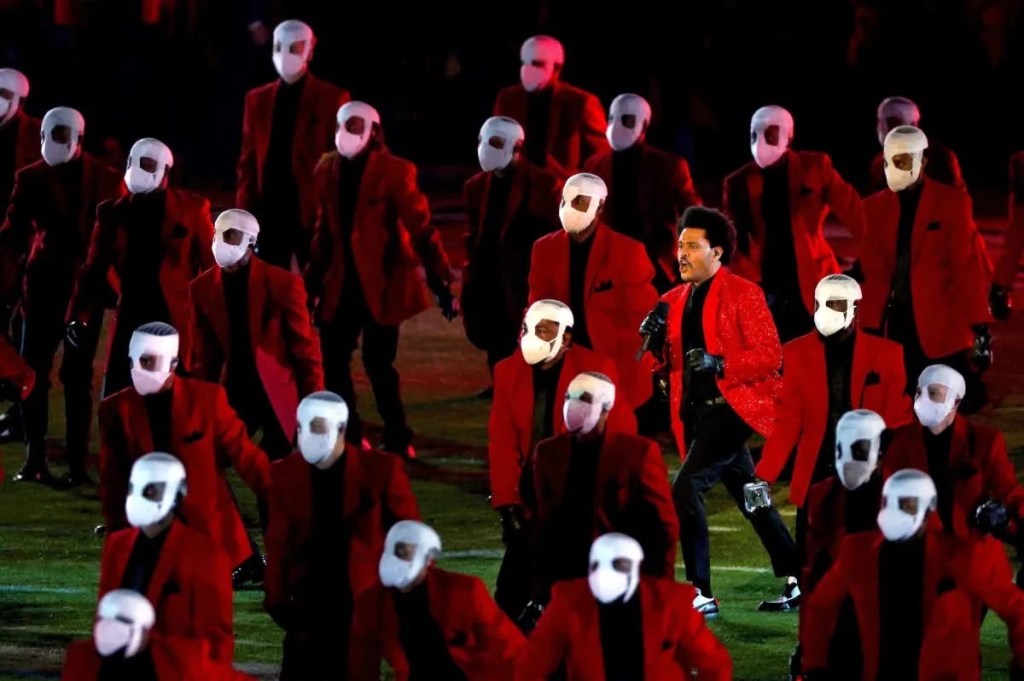
6. The Weeknd (2021) – Capitalism & Celebrity Culture
At first glance, The Weeknd’s show didn’t seem political. No speeches, no overt references. But the message? It was all in the visuals. The entire performance mirrored themes from his After Hours album—fame as a machine, capitalism as a trap, and the media as a force that distorts reality. The red-jacket clones, the chaotic funhouse, the dizzying camera angles—it was all designed to feel like being lost in Hollywood’s illusion. And given how the Super Bowl itself is the pinnacle of corporate entertainment, The Weeknd critiquing the industry while performing in its biggest event? That’s subversive as hell.
7. Dr. Dre, Snoop, Eminem, Mary J. Blige & Kendrick Lamar (2022) – Hip-Hop’s Grand Coronation
For years, the NFL treated hip-hop like a liability. Now, it was the headliner. This show wasn’t just entertainment—it was a cultural reclamation.
Eminem taking a knee? Was it a nod to Colin Kaepernick or out of respect for Tupac? Yes!
Kendrick performing Alright? That song is a Black Lives Matter anthem.
Snoop crip-walking and throwing up gang signs unapologetically, after decades of the NFL demonizing hip-hop culture? Iconic.
This wasn’t just a halftime show. It was hip-hop demanding its place at the table.
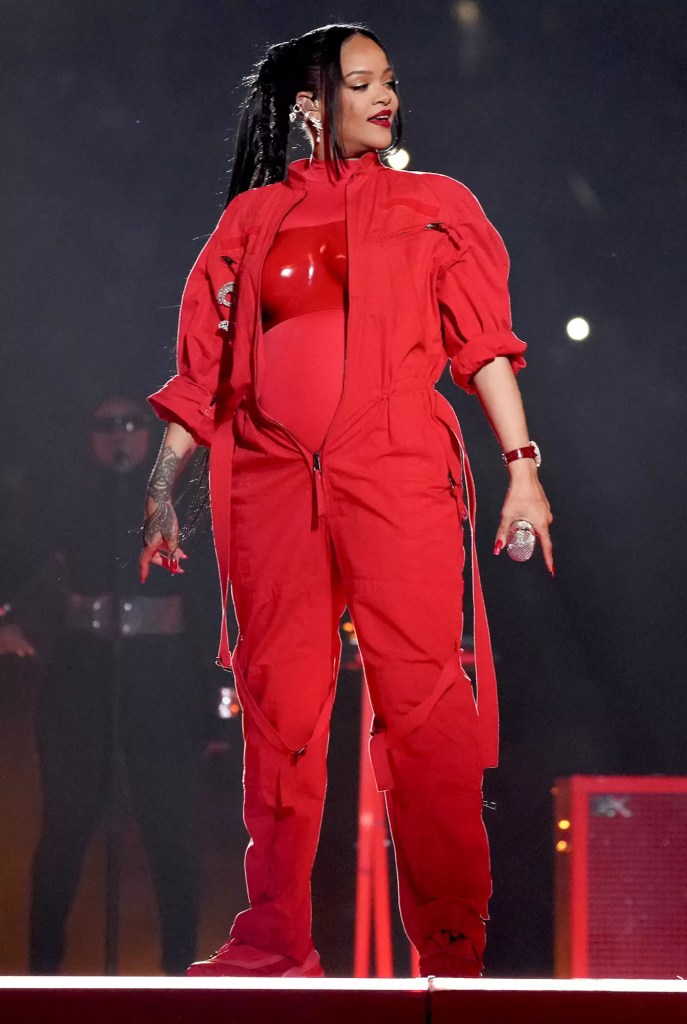
8. Rihanna (2023) – The Soft Power of Black Motherhood
Rihanna came out glowing—literally. She revealed her pregnancy mid-show, turning Black motherhood into a statement of power and autonomy. In a country where Black maternal mortality rates are sky-high, where reproductive rights are constantly under attack, her presence alone was political. No guests, no theatrics—just her, owning her moment, taking up space.
9. Kendrick Lamar (2025) – Patriotism, Gang Unity & Black Identity
And now, Kendrick. The man who can make even a Super Bowl performance feel like a dissertation on America’s contradictions.
Uncle Sam calling the dancers “too ghetto”—an audio-visual entendre on respectability politics and who gets to be seen as American.
Red and blue dancers moving together—a nod to gang unity and the struggle to break free from systemic cycles.
The American flag formed by POC dancers—a reminder of who actually built this country.
Backup dancers in baggy garb, a fully clothed SZA, and a Crip-walking Serena Williams—this wasn’t just a spectacle; it was a message. In an industry that often reduces Black women to our bodies, Kendrick’s halftime show was a quiet rebellion. Hip-hop, a genre that has both uplifted and objectified Black women, was confronted with a different narrative: one where our presence isn’t dependent on being hypersexualized. And Serena? Her dance, once criticized as ‘inappropriate’ when she celebrated a Wimbledon win, was now center stage—reclaimed, recontextualized, and unapologetic.”
Kendrick didn’t just put on a show. He held up a mirror, and whether America liked what it saw or not? Deal with it or “turn the TV off.”
Why the Super Bowl Keeps Getting More Political
The NFL tried to shut politics out—blackballing Kaepernick, discouraging protests—but the artists? They said nah. The Super Bowl is America’s biggest stage, and when you give creative people that kind of platform, they gon’ say something real. And that’s the truth about entertainment now—it’s not just about escape. It’s a battlefield. A mirror. A microphone. And as long as America keeps pretending that sports and politics don’t mix? Artists will keep proving them wrong. Some folks might say, this ain’t the time or the place. Maybe. But riddle me this—what would you say if the whole nation was locked in, hanging on your every word? If your people been screaming into the void, and you’ve been handed the mic on the biggest stage in America, with the whole world tapped in, would you really stay silent?
“Ordinarily, everything we do is in our self-interest. Everything.”
~Anthony de Mello
You ever done something nice for somebody and then felt kinda… good about it? Maybe even proud? Yeah. That. That feeling right there is why I don’t believe in altruism.
Don’t get me wrong—I’m not saying people ain’t generous, kind, or self-sacrificing. Folks do wild, beautiful, selfless-looking things all the time. They donate money, they risk their lives, they stay up all night listening to a friend cry over a breakup for the fourth time when we told them Jerome wasn’t shit. But what if I told you that every single one of those acts—every favor, every good deed, every ‘just because’—was really about themselves? About us? About how we want to see ourselves, feel about ourselves, or be seen by others?
Being a good person means putting other people first. That’s what they teach us, right? In church, in school, in those after-school specials where the hero gives up their last piece of candy or lets somebody else take the credit for their science fair project. But the more I paid attention, the more I realized that even when we do for others, we’re still, somehow, doing for ourselves.
When “Selflessness” Ain’t Really Selfless
Take my time in ministry, for example. I loved teaching Bible study. Loved breaking down scripture, finding ways to make it relevant, making folks laugh, and making them think. And yeah, I wanted to help people—wanted them to feel seen, feel loved, feel understood. But it also made me feel good. It made me feel like I had purpose. Like I was living right. Like I was earning my spot in God’s good graces. Whenever I made my pastor laugh, I knew I was getting a good recommendation for Heaven. So, was it really a selfless act? Or was I just feeding a different part of my own soul?
And what about my time as a teacher and coach? I had students that I went hard for. I showed up for them, advocated for them, and gave them the support I wished I’d had at their age. And it was rewarding. But what happens when that feeling of purpose becomes something we need? When we tie our worth to what we do for other people? When our identity gets so wrapped up in being ‘the helper’ that we don’t even know who we are outside of it?
That’s the thing about self-interest—it ain’t always selfish. But it’s always there.
Ain’t No Such Thing as a Free Lunch
Hate only goes so far—it’s self-interest that goes the distance. At the end of the day, people will abandon their so-called principles, morals, and righteous indignation if it benefits them enough. And the reverse is true, too: People will dig their heels in and go to war over something if they feel like it threatens their identity, their security, or their power.
So when I hear folks argue that genuine altruism exists, I side-eye a little. Because why do people do good things? Out of the goodness of their hearts? Maybe. People love to say they do good for the sake of good. But even that goodness had to come from somewhere. Maybe their mama raised them that way. So, really, they’re not selfless—they’re obedient. A “good person” is just someone who does what they were told; that’s the whole point for some folks. It feels good to be good. It keeps them in alignment with who they were taught to be. They may get a little serotonin hit from helping others. It may align with their spiritual beliefs or how they see themselves. But whatever it is, it serves them in some way.
Even if you break your back helping people and never ask for anything in return, there’s still a reason why you do it. Maybe you like feeling needed. Perhaps you don’t wanna feel guilty. Maybe you just wanna believe you’re a good person. But ain’t none of it done in a vacuum.
The “Strong Black Woman” Scam & Other Traps
Now, you know I gotta bring it back to my people. Black women, specifically. Because if anybody has been fed a steady diet of “give until you got nothing left,” it’s us. We’ve been taught that our worth is tied to what we do for others—how much we let slide, sacrifice, and endure. The Strong Black Woman myth is built on the idea that we should put everyone else first and ourselves last.
But what happens when we recognize that our so-called ‘selfless’ acts are driven by conditioning, survival, or social pressure? Sometimes, we’re doing things not just because we want to but because we feel like we have to? That ain’t altruism—that’s expectation.
And let’s be real, even the most nurturing, giving Black women out there? They still get something out of it. It might be pride. It might be respect. It might be a sense of control in a world constantly trying to take our power. But even when we’re giving, we’re getting.
So… What Now?
If altruism isn’t genuine, does that mean we should stop helping people? Stop giving? Stop caring?
Nah. It means we need to be honest about why we do what we do and start prioritizing how we care for ourselves, too. If everything we do is in our own self-interest, we might as well ensure that interest includes our own well-being, not just everybody else’s.
We gotta stop acting like doing things for ourselves is wrong. Like setting boundaries makes us selfish. Like choosing joy, choosing peace, choosing ourselves is somehow a betrayal of our goodness. Because self-interest isn’t just about making sure everybody else is okay—it’s about making sure we’re OK, too.
So yeah, I don’t believe humans are capable of pure altruism. But I do believe in balance. In reciprocity. We choose to give, love, and support—not out of obligation, not to earn some moral high ground, but because it aligns with who we want to be. And if that makes us feel good? Well. Maybe that ain’t such a bad thing after all. I mean, don’t we all like a good filter every now and again?
“They say a woman’s first blood doesn’t come from between her legs but from biting her tongue.” – Meggie Royer.
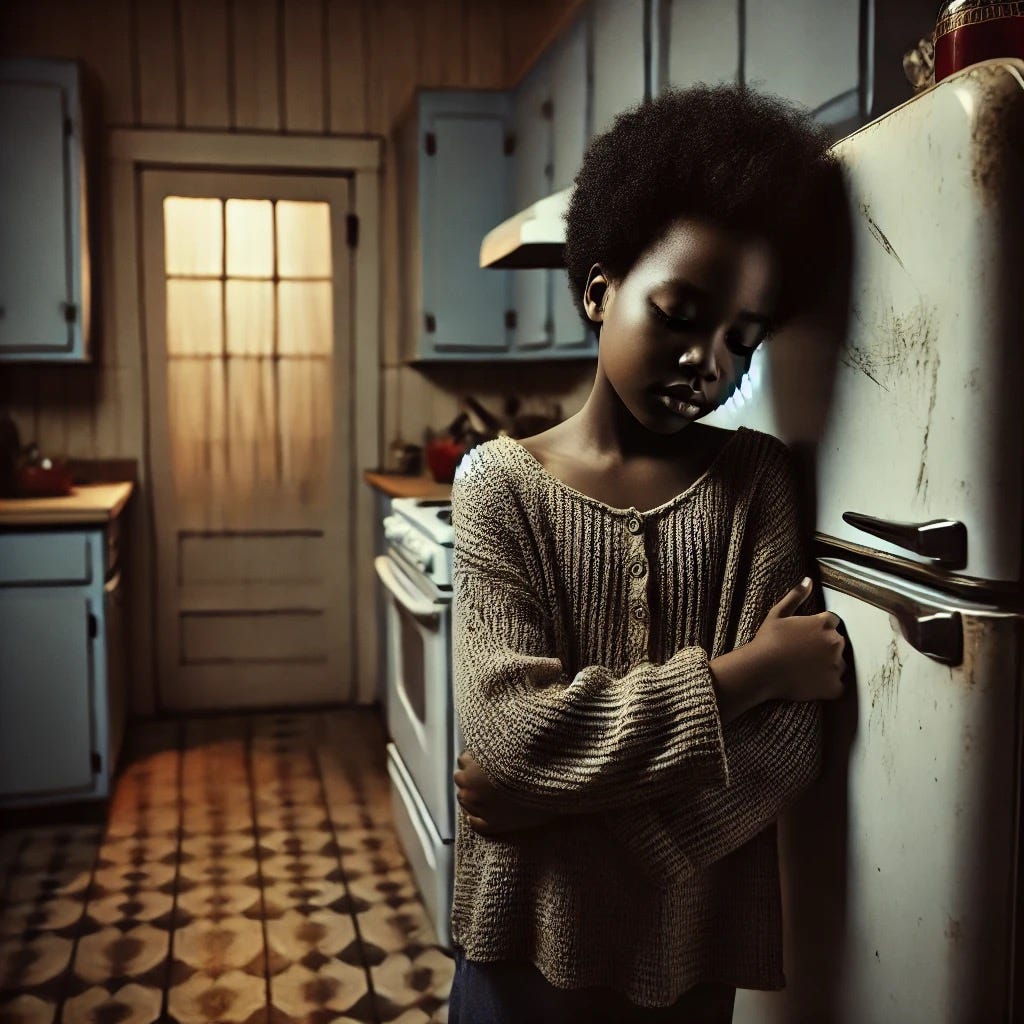
My first blood didn’t come from biting my tongue. It came from my mother’s fists.
I was 12, standing in the kitchen with my back against the refrigerator. My father was in the middle of one of his long-winded lectures—this time about respect. My brothers stood nearby, silent observers. My crime? I told my volleyball coach it was my mother’s fault I was late to practice. My mother didn’t let my father finish. She interrupted him, her face calm and expressionless as if attempting to hide her rage, though her eyes betrayed her. She punched me in the face—once, twice, again and again. I don’t remember what came after. I don’t know what words were said, only the sharp pain and the cold surface against my back. I remember looking at my brothers and father, expecting someone to intervene. No one moved.
No one said a word.
To this day, I don’t know what was worse: the punches or the silence. The way they all seemed to agree that I deserved it. And for what? What was my crime? Tarnishing her image? Speaking a truth she didn’t want to hear? I still don’t know.
This wasn’t an isolated moment. There was another time, the weekend my uncle came to visit. My mother beat me until my nose and face bled. I had told her I’d already taken the ham—or was it the turkey?—out of the fridge. I guess she didn’t like the way I said it. I ran to the upstairs bathroom, leaving a trail of blood in my wake, sobbing as I tried to stop the bleeding.
Once again, the house was full of family. Once again, no one intervened.
It took me decades to understand that her violence wasn’t always about me. My mother was married to an unfaithful man, a husband who left her needs unmet and her emotions unacknowledged. That weekend, my father was gone—absent as he often was—leaving her anger untethered and me as the only target she could control. She couldn’t confront him, so she turned it on me. But knowing that doesn’t make it hurt less. I never witnessed my father hit his wife, though they both beat me. It’s more than unsettling to hear her claims of being a battered wife as if my father were the only one throwing punches in our home.
But knowing that doesn’t make it hurt less.
Growing up under a covert narcissist meant that my voice, my needs, and my truths were threats to her carefully curated image. I was punished for being late, punished for my tone, and punished simply for existing in ways that didn’t serve her narrative. Silence was my armor. And biting my tongue a survival skill.
Her memory may be lacking. But my body doesn’t forget. Swallowed words and suppressed truths have a way of lingering. The blood from bitten tongues doesn’t just disappear; it festers. The wounds deepen when you hold back anger, frustration, or sadness. Until one day, it’s too much.
I think about those moments often. I wonder why no one spoke up, why no one stepped in. And I wonder how many other girls—especially those who look like me—are taught that silence is the price of survival.
But I also think about the power of breaking that silence, of finding the courage to say enough, to spit out the blood, even if it stains, to reclaim the words and truths that were taken from you.
This post isn’t just about the pain of biting your tongue—it’s about the freedom of stopping. It’s about letting the blood spill, no matter how messy, and learning to heal on your own terms. Because we’ve bled long enough.









 Bontifficating